
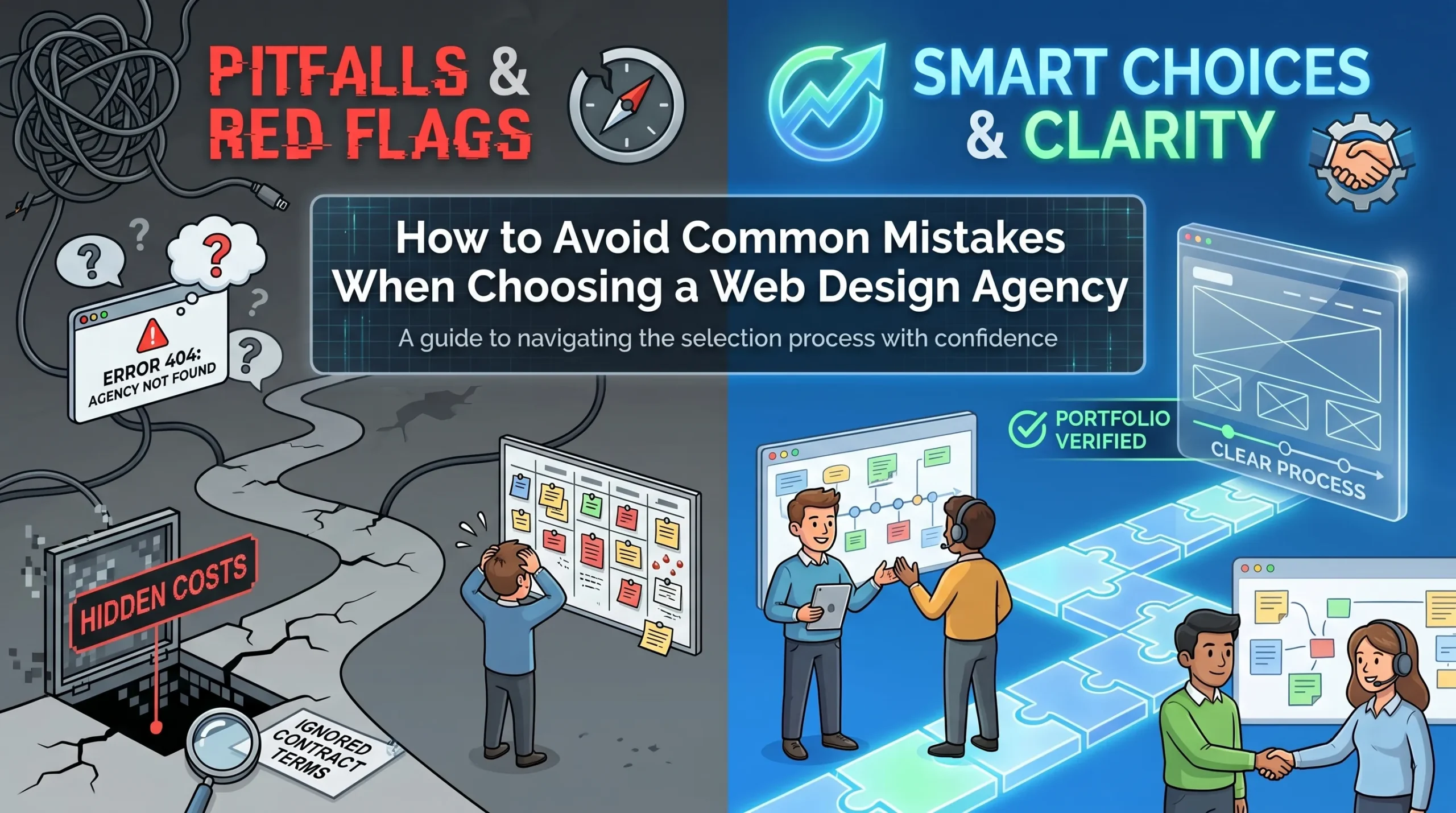
Choosing the right web design agency can feel overwhelming. You might worry about wasting money or ending up with a site that does not meet your needs. Many people rush the process and skip important research, which leads to poor results. Taking time to learn how to choose a web design agency helps you make smart decisions and avoid costly mistakes.
Start by focusing on key research and preparation steps.
How to Choose a Web Design Agency: Research and Preparation
Before you contact any agency, you need to know how to choose a web design agency that fits your needs. Careful research helps you avoid common mistakes and sets your project up for success.
Review the Agency’s Website and Portfolio
Start by exploring the agency’s own website. A professional site shows their attention to detail and design skills. Check how easy it is to navigate and if the content is clear. Next, look at their portfolio. This gives you a sense of their style and the range of projects they handle.
Use the table below to see what you can learn from different portfolio examples:
|
Portfolio Example |
Key Features |
Insights |
|---|---|---|
|
Awwwards |
Structured case studies, results |
Shows storytelling and design process communication |
|
Pages Report |
Trend analysis, quality benchmarks |
Reveals trends in user experience and visual styles |
|
UM Digital |
Award-winning characteristics |
Focuses on visual appeal and user experience |
Check Case Studies and Testimonials
Case studies help you understand how to choose a web design agency by showing real project results. Look for clear objectives, challenges, solutions, and measurable outcomes. Client testimonials add trust. Research shows testimonials can boost conversions by up to 70%. They give you social proof and help you feel confident in your choice.
Assess Experience and Digital Marketing Skills
You should find out about their experience in your industry. Ask about their website design process and how they handle user experience. A strong agency will also have digital marketing skills. Look for project management, knowledge of design trends, user research, and SEO. These skills add value to your website project and help you reach your goals.
Define Your Goals and Budget
Before you choose a web design agency, define what you want your website to achieve. Set a clear budget and ask about payment plans or extra charges. Find out about their experience with ongoing support and maintenance. Good planning now prevents problems later and helps you get the most from your web design services. If you work with a development company, clear goals and budget make the process smoother.
Initial Contact with a Website Design Agency
After you finish your research, you need to reach out to your chosen agencies. This first contact sets the tone for your project. You want to make sure you ask the right questions and look for clear, honest answers.
Ask About Their Design Process
Start by asking about the agency’s website design process. This helps you understand how they plan and manage projects. You can use these questions to guide your conversation:
-
What is your design and project management process?
-
Do you have a documented design process or standard operating procedure?
-
What project management software do you use?
-
How do you keep the project on track and within budget?
-
Who should I contact for revisions or questions?
-
Which features are essential at launch, and which can wait?
-
How soon can you launch the website?
These questions help you see if the agency has a clear plan and if they can deliver on time.
Understand Team Roles and Communication
You should know who will work on your project and how you will communicate. Clear team roles help everyone focus on their tasks. Strong communication keeps your project running smoothly and builds trust. Ask the agency:
-
Who will be my main point of contact?
-
How often will we meet or get updates?
-
What is your preferred contact method?
-
What times are best for reaching out?
Agencies with strong communication protocols often have happier clients. They set clear expectations and reduce misunderstandings. You can also bring examples of websites you like or a document with your goals to help the team understand your vision.
Clarify Hosting and Ongoing Support
Ask about hosting and support before you sign any agreement. You need to know:
-
How long does the support period last?
-
What is included in the support?
-
What are the costs for ongoing support after the initial period?
Clear answers help you avoid surprises and make sure your website stays up and running.
Evaluate and Choose a Web Design Agency
Now that you have gathered information and made initial contact, you need to evaluate agencies and make your final choice. This step helps you avoid common mistakes and ensures you select the right web design agency for your project.
Compare Proposals and Pricing
You will likely receive several proposals from different web design agencies. Do not focus only on the lowest price. Instead, compare the value each agency offers. Review what is included in each proposal, such as design, development, support, and extra features. Look for clear details about the project scope, timeline, and responsibilities.
Use the table below to compare proposals based on important criteria:
|
Criteria |
Description |
|---|---|
|
Scope and deliverables |
Review what is included, such as modules, integrations, and responsibilities. |
|
Cost and total cost of ownership |
Consider all costs, including licensing, implementation, and support, to understand the lifetime cost. |
|
Timeline and milestones |
Check if the proposed timeline and milestones are realistic and detailed. |
|
Technical fit and architecture |
Assess how well the solution fits your current and future technical needs. |
|
Security, compliance, and risk |
Evaluate certifications and risk management strategies. |
|
Support, SLA, and vendor relationship |
Compare post-launch support, response times, and cultural fit. |
|
Vendor reputation and references |
Check client references and past project success to gauge credibility. |
You should also understand the average price range for web design services. This helps you spot offers that are too high or too low.
Here is a quick overview:
|
Price Range |
Description |
|---|---|
|
$3,000 to $8,000 |
Entry-level agency or freelancer work, often using templates and minimal support. |
|
$8,000 to $20,000 |
Professional studio work for small-to-midsize business websites with genuine design processes. |
|
$20,000 to $60,000 |
Established agency work for complex projects with custom features and multiple audience types. |
|
$60,000 and above |
Enterprise-level projects with multi-market sites and data-intensive applications. |
When you compare proposals, look for the best fit for your goals and budget, not just the lowest price.
Spot Red Flags and Transparency Issues
You need to watch for warning signs when you evaluate agencies. Some proposals may look attractive but hide problems that can cost you later. Here are common red flags:
-
Extremely low prices may mean the agency uses templates or lacks experience.
-
Lack of detail on scope and process can lead to extra costs and confusion.
-
Promises of instant results or high search rankings are usually unrealistic.
-
Agencies that only show mock-ups or avoid sharing live websites may lack real experience.
-
Unrealistic timelines, especially if the agency is slow to respond, can signal trouble.
-
Vague pricing structures can lead to unexpected costs.
-
Poor communication during the proposal stage often means future issues.
Transparency matters in every contract. Before you sign, check for these issues:
-
Missing or vague deliverables can create accountability gaps.
-
Contracts that use terms like “as needed” or “at agency discretion” can lead to misunderstandings.
-
Auto-renewal clauses with narrow cancellation windows may not put your needs first.
-
Contracts that focus on hours instead of specific outputs can make it hard to measure results.
-
Agreements that protect the agency more than the client are a concern.
Note: Clear contracts and open communication protect you from surprises and help you build a strong partnership.
Verify References and Past Work
You should always check references and review past work before you choose a web design agency. This step helps you confirm the agency’s skills and reliability. Follow these steps to verify references:
-
Check the accuracy of the information the agency provides by using other selection methods.
-
Compare the agency’s past work to the skills needed for your project.
-
Look for background information that may not appear in the proposal or on the agency’s website.
-
Call references directly to get honest and detailed feedback.
-
Use a structured list of questions based on your project needs to collect consistent information.
Ask references about their experience with the agency, the quality of the final website, and the level of support they received. This process helps you avoid surprises and choose a website design agency that can deliver on its promises.
Finalize Your Agreement with the Web Design Agency
After you evaluate a web design agency’s portfolio and select your partner, you need to finalize your agreement. This step protects your interests and sets the stage for a successful website launch. Make sure you address every detail before signing.
Confirm Deliverables and Timelines
Get all deliverables, timelines, and support terms in writing. A clear contract outlines what you will receive, when you will receive it, and how feedback will work. Use the table below to see what should be included:
|
Aspect |
Description |
|---|---|
|
Deliverables |
List all items you expect, such as design files, code, and documentation. |
|
Objectives |
Define your project goals to keep everyone aligned. |
|
Timeline |
Set deadlines for each stage to avoid delays. |
|
Schedule points for reviewing work and giving feedback. |
|
|
Feedback timeline |
Set timeframes for your responses to keep the project moving. |
|
Revision rounds |
Agree on how many revisions are included to control costs. |
|
Payment schedule |
Outline when and how you will pay for each phase. |
|
Additional expenses |
List any extra costs that may come up. |
Understand Ownership and Intellectual Property
Clarify who owns each part of your website. Ownership and intellectual property rights define what you can use and control after creating a website. Usually, you do not own the domain name, hosting platform, or software. You may get a license to use certain elements. You own the visual design and content if you create them or have a work-for-hire agreement.
Make sure your contract spells out these details so you know your rights.
-
You do not own the web server or database software.
-
You may only own the source code if the contract says so.
-
You own your graphics and content if you create them.
Ensure Ongoing Support and Maintenance
Ask about ongoing support and maintenance before you sign. A good website design agency will offer services like monthly diagnostics, updates, bug fixes, and performance checks. They should also provide regular reports and recommendations. Support may include:
-
Technical maintenance and security updates
-
Content management and user experience improvements
-
Performance monitoring and bug fixes
-
Monthly reports and recommendations
By finalizing these details, you set up your project for long-term success and avoid common pitfalls.
To avoid common mistakes when choosing a web design agency, you should follow these steps:
-
Review the agency’s website for design quality.
-
Explore case studies and testimonials for real results.
-
Check their experience in web design.
-
Confirm their digital marketing skills.
When you focus on transparency and long-term support, you increase your project’s value and reduce wasted resources. You set your website up for success by making careful choices at every stage.
FAQ
How long does it take to build a website with an agency?
You can expect most web design projects to take 4 to 12 weeks. The timeline depends on your project size, feedback speed, and the agency’s process.
What should you prepare before meeting an agency?
Bring a list of your goals, examples of websites you like, and your budget range. This helps the agency understand your needs and suggest the best solutions.
How do you know if an agency is trustworthy?
Check their portfolio, read client testimonials, and ask for references. A trustworthy agency will answer your questions clearly and provide proof of past success.
What happens if you need changes after launch?
Most agencies offer ongoing support or maintenance plans. Ask about revision policies and support options before you sign any contract.